
Kidney Cancer: When Can Partial Nephrectomy Preserve the Healthy Kidney?
When can a renal mass be removed while saving the remainder of the kidney? Clinical indications, renal function preservation, and minimally invasive options.

Dr Najib Abakka
Urological Surgeon in Rabat
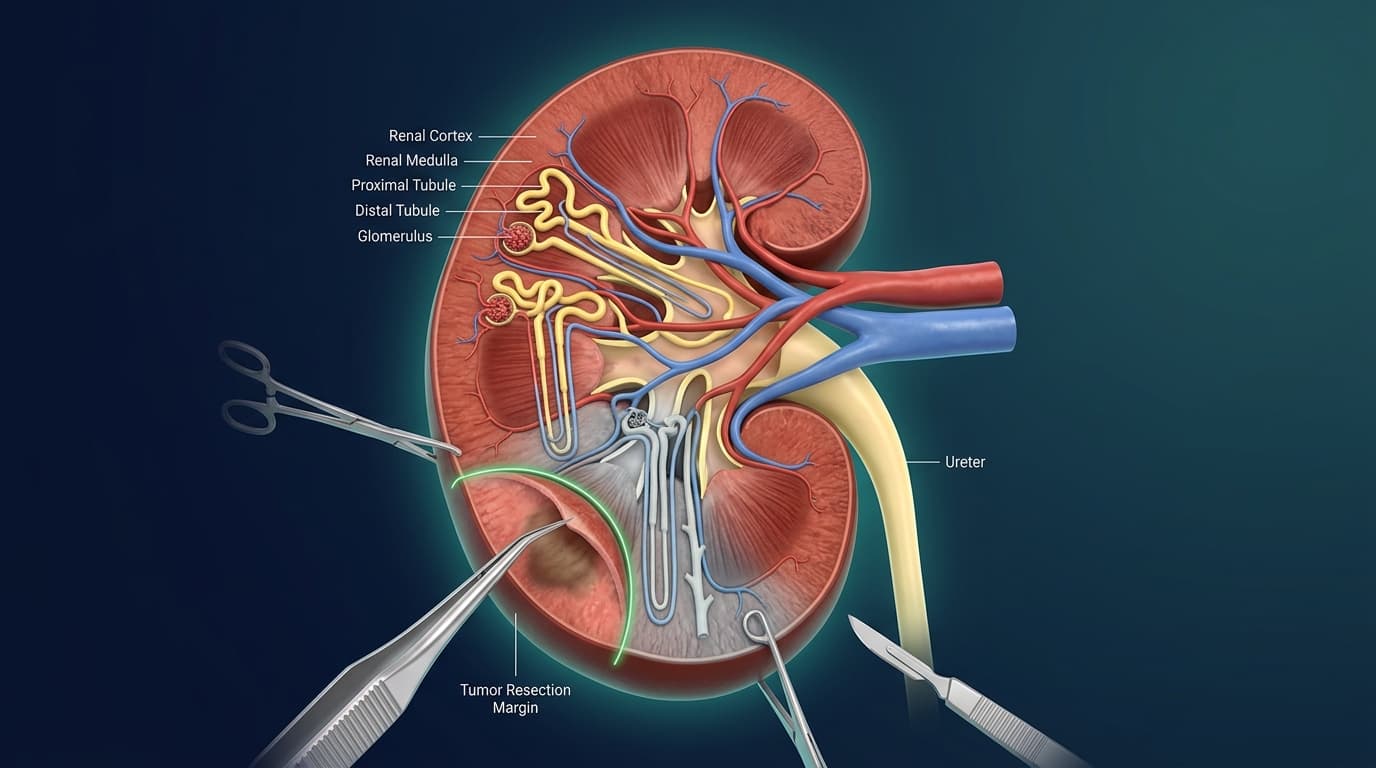
Principe de la néphrectomie partielle préservant le parenchyme rénal sain
What is a partial nephrectomy?
Partial nephrectomy (nephron-sparing surgery) removes the renal tumor with a safe parenchymal margin while leaving the remainder of the healthy kidney intact. Guidelines strongly advocate this approach for localized small renal masses (especially T1 tumors, under 7 cm) whenever surgically feasible.
Conversely, radical (total) nephrectomy remains necessary when the tumor is excessively large, invades main renal vessels, replaces the majority of the kidney, or when partial resection would compromise oncological margins.
Why is kidney preservation critical whenever possible?
Kidneys regulate systemic blood pressure, fluid homeostasis, and metabolic waste clearance. Preserving functional renal tissue is crucial for long-term cardiovascular health, particularly in patients with hypertension, diabetes, pre-existing renal insufficiency, or a solitary kidney.
However, preservation cannot supersede oncological safety. The surgeon balances complete cancer excision, ischemic clamp time, and functional tissue preservation.
The role of robot-assisted laparoscopic nephrectomy
Partial nephrectomy can be approached via open, conventional laparoscopic, or robotic-assisted surgery. Clinical evidence compiled in EAU guidelines demonstrates that minimally invasive robotic techniques reduce warm ischemia time, intraoperative bleeding, and convalescence in complex tumors.
Tumors embedded deeply within the renal hilum benefit particularly from robotic 3D stereoscopic visualization and wristed articulation during precise renorraphy suturing.
Essential scans required prior to consultation in Rabat
For patients seeking an expert opinion from outside Rabat, cross-sectional imaging is paramount. Providing native DICOM discs (multiphasic contrast-enhanced CT or MRI) allows dynamic multiplanar evaluation. Recent serum creatinine, estimated GFR, and past surgical notes complete the file.
Frequently asked questions
Can a kidney always be preserved during tumor surgery?
No. Feasibility depends on tumor size, central depth, relationship to renal vascular pedicles, and safety of surgical reconstruction.
Does robotic assistance improve oncological cure rates?
Cancer cure depends on complete resection with clear margins; robotic assistance facilitates precision, particularly in reconstructive suturing and minimizing ischemia.
Is the written radiology report sufficient without image files?
No. The surgeon must review the native DICOM scan series directly to evaluate vascular anatomy and tumor complexity (RENAL nephrometry score).
Related guides & articles
Browse all articles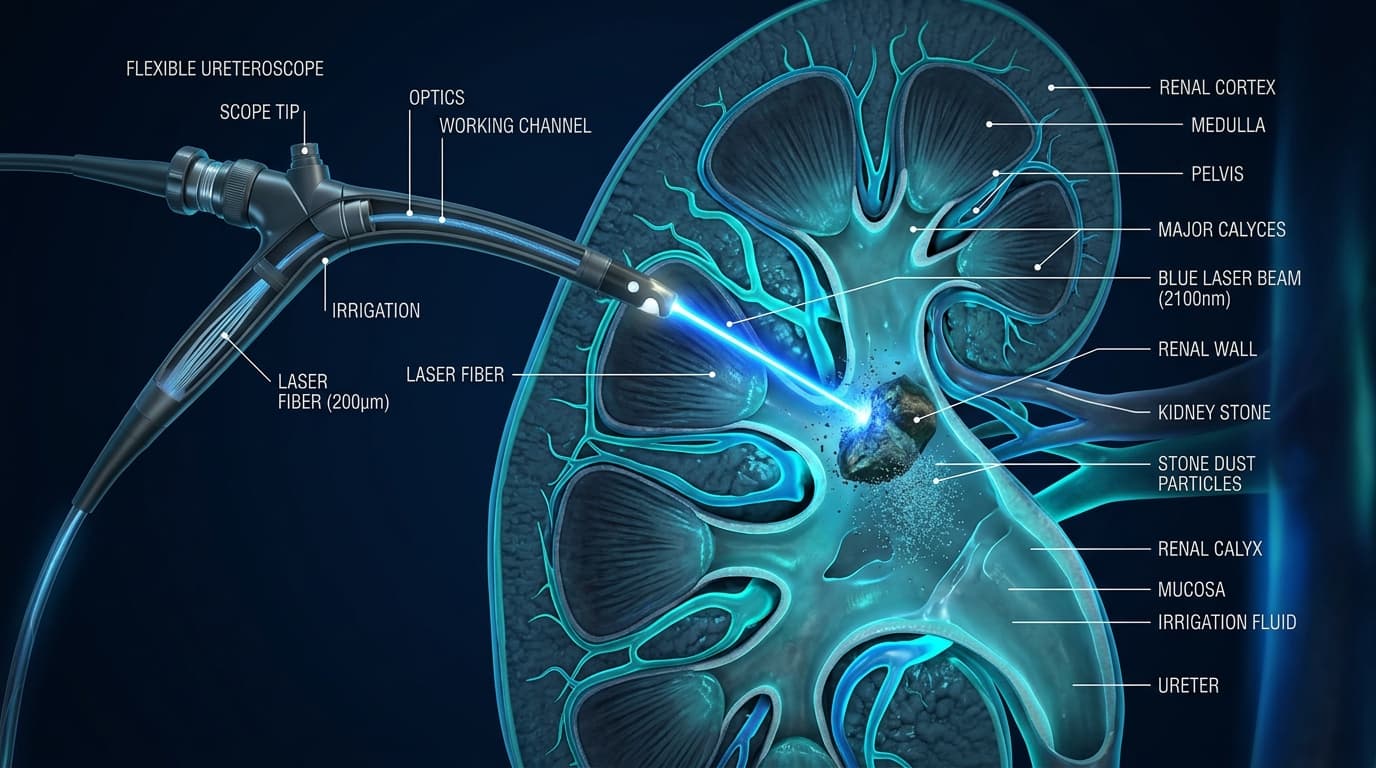
Kidney Stones: When is Laser Ureteroscopy Recommended?
How does laser ureteroscopy work, for which stones is it recommended, and what should you know about JJ stents and recovery?

Robotic Surgery in Urology in Rabat: What Patients Should Know Before Deciding
Understand robot-assisted urological surgery, its clinical indications, limits, and essential questions to ask before deciding.

Prostate Cancer: From PSA to MRI, Understanding the Diagnostic Pathway Before Discussing Surgery
An elevated PSA does not automatically mean cancer. Learn how PSA, clinical exam, multiparametric MRI, and targeted biopsy fit together.