
Kidney Stones: When is Laser Ureteroscopy Recommended?
How does laser ureteroscopy work, for which stones is it recommended, and what should you know about JJ stents and recovery?
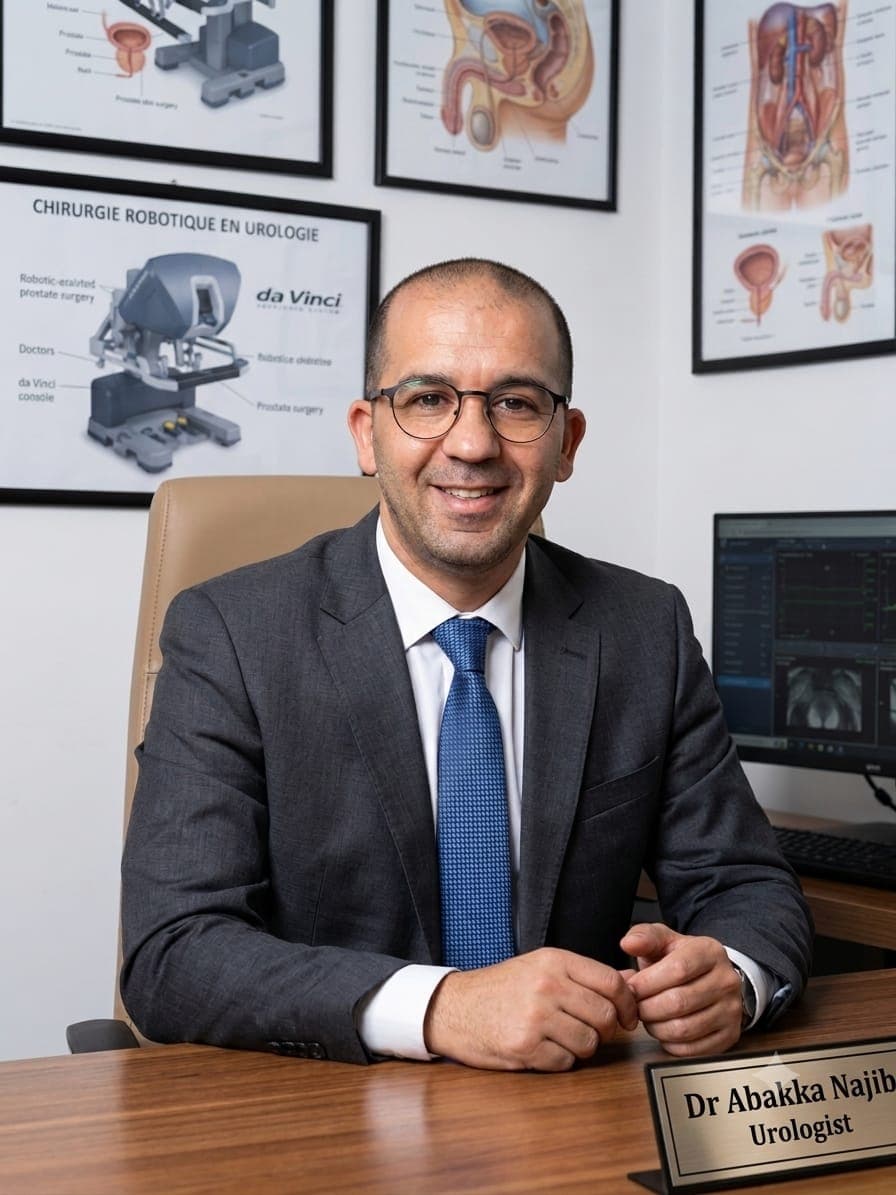
Dr Najib Abakka
Urological Surgeon in Rabat
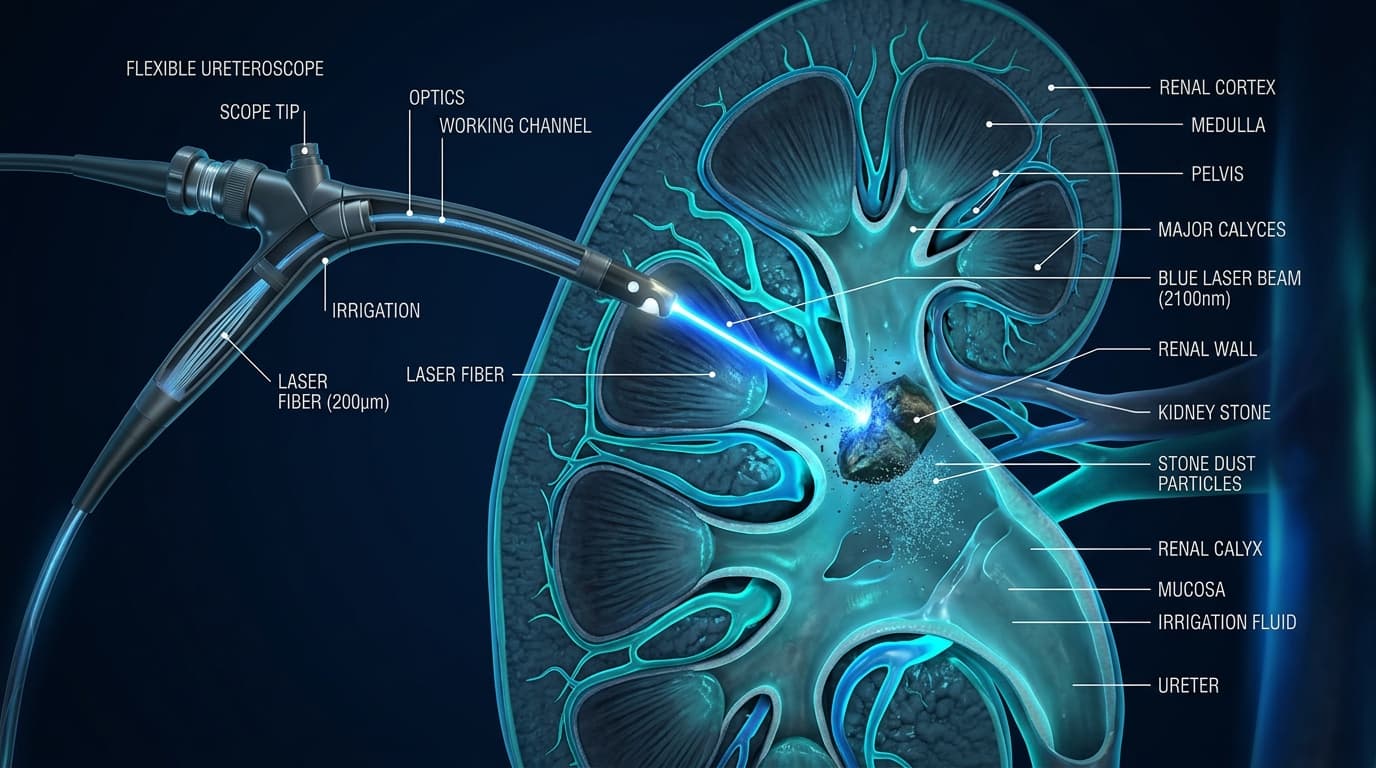
Fragmentation endoscopique ultra-précise des calculs urinaires au laser sans incision
How is ureteroscopy performed?
An ultra-slim, flexible endoscope is introduced retrogradely through the urethra, passing into the bladder and navigating up the ureter into the renal collecting system. Flexible ureterorenoscopes enable precise inspection of calyces. Stones are directly fragmented or pulverized into dust using dedicated fiber lasers.
Holmium:YAG and thulium fiber lasers represent the standard systems recommended by European Association of Urology guidelines for endoscopic lithotripsy.
When is this technique the preferred choice?
Procedural choice is governed by stone size, precise renal or ureteral anatomical location, Hounsfield density on CT urogram, patient body habitus, baseline renal function, and ongoing anticoagulation.
While extracorporeal shockwave lithotripsy (ESWL) may serve as an alternative for select calculi, flexible ureteroscopy typically yields higher single-procedure stone-free rates. Detailed clinical evaluation ensures patient-tailored selection.
Why is a Double-J stent sometimes placed?
Following ureteroscopy, an internal Double-J ureteral stent may be placed to maintain adequate urinary drainage and avert post-procedural colic from mucosal edema. The stent is temporary and typically removed within several days to a few weeks.
Stenting is not mandatory in every uncomplicated procedure. Patients receive clear instructions regarding stent presence, expected mild dysuria, and scheduled removal date.
Treatment does not end with stone removal
Urolithiasis carries a significant lifetime recurrence rate. Comprehensive care extends beyond stone clearance to infrared spectrophotometric stone analysis, metabolic evaluation, and tailored hydration and dietary guidance.
For patients traveling to Rabat for stone surgery, this comprehensive preventive pathway is initiated from the initial consultation.
Frequently asked questions
Does ureteroscopy require a surgical incision?
No. The endoscope travels through natural urinary pathways without any cutaneous incisions.
Does the laser damage the kidney tissue?
No. The laser energy is delivered via micro-fiber under direct visual magnification strictly focused onto the stone surface.
Is a Double-J stent mandatory in every case?
No. Temporary stenting depends on intraoperative findings, ureteral caliber, mucosal edema, and stone burden.
Related guides & articles
Browse all articles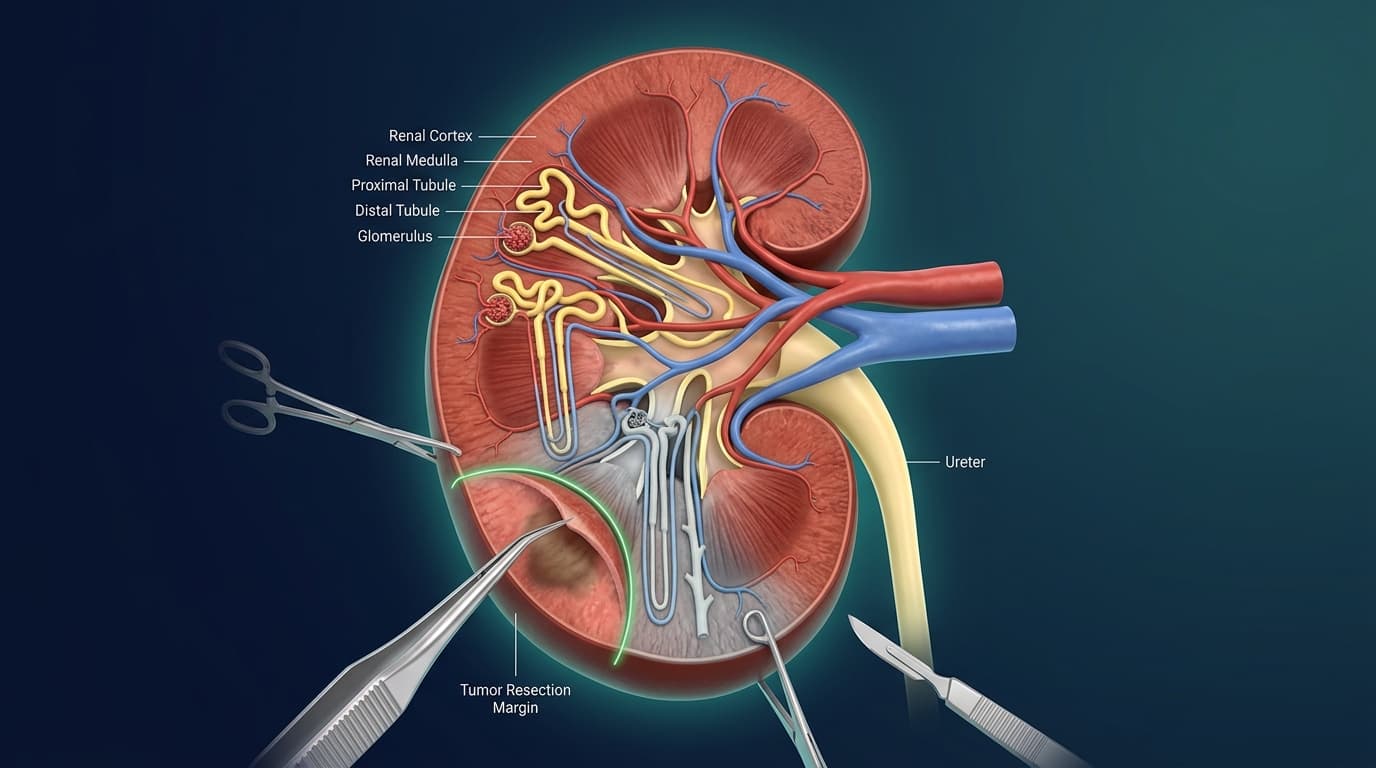
Kidney Cancer: When Can Partial Nephrectomy Preserve the Healthy Kidney?
When can a renal mass be removed while saving the remainder of the kidney? Clinical indications, renal function preservation, and minimally invasive options.
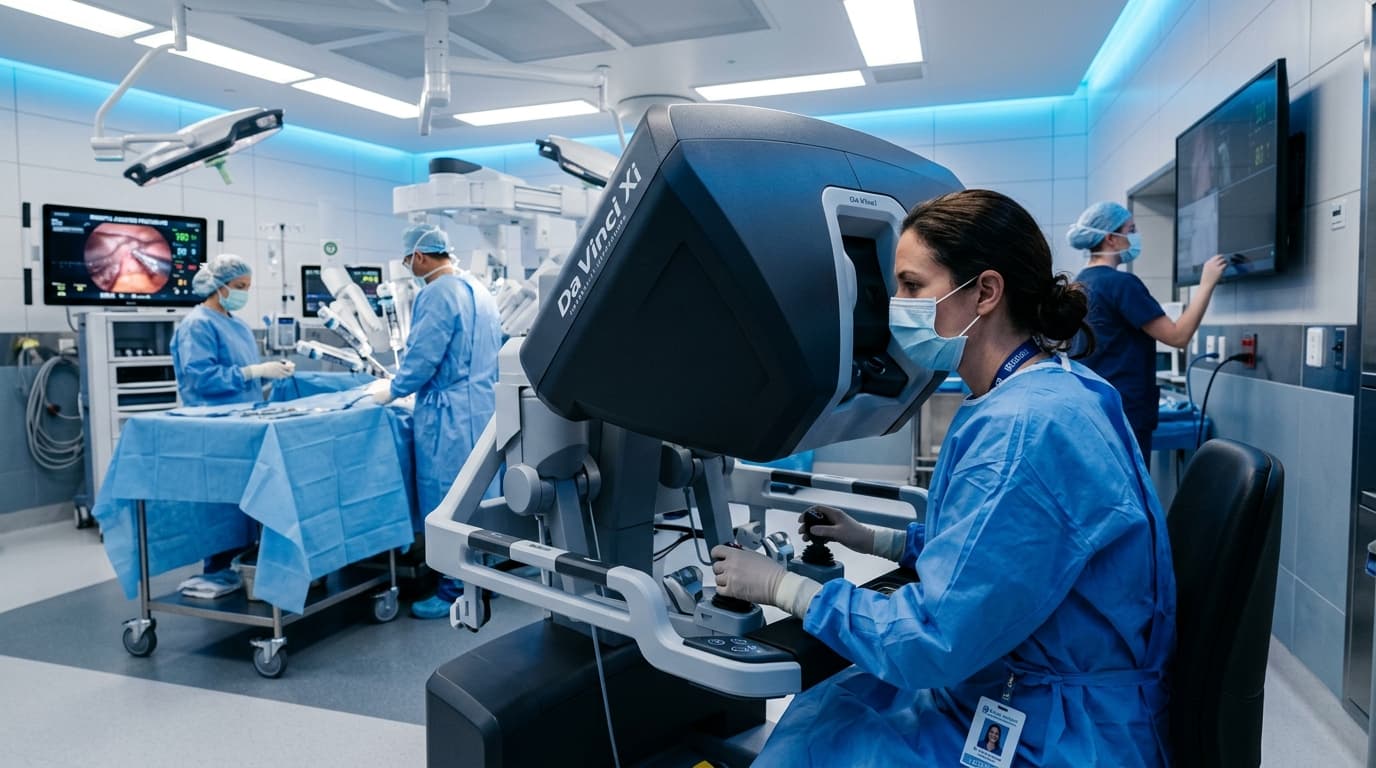
Robotic Surgery in Urology in Rabat: What Patients Should Know Before Deciding
Understand robot-assisted urological surgery, its clinical indications, limits, and essential questions to ask before deciding.

Prostate Cancer: From PSA to MRI, Understanding the Diagnostic Pathway Before Discussing Surgery
An elevated PSA does not automatically mean cancer. Learn how PSA, clinical exam, multiparametric MRI, and targeted biopsy fit together.