
Life After Prostate Surgery: Continence, Sexual Health, PSA, and Follow-Up
What to expect after radical prostatectomy? Catheter care, urinary continence, erectile recovery, pathology results, and PSA monitoring.

Dr Najib Abakka
Urological Surgeon in Rabat

Accompagnement post-opératoire structuré : continence, réhabilitation et suivi biologique
The first days: urinary catheter, early mobilization, and healing
Following radical prostatectomy, a urinary catheter is maintained temporarily to protect and allow primary healing of the vesicourethral anastomosis. Duration varies from several days to two weeks depending on the surgical technique.
Early progressive ambulation is initiated on postoperative day one to enhance recovery and prevent thrombotic complications, while vigorous physical exertion is deferred.
Written discharge protocols provide explicit instructions regarding wound hygiene, anticoagulation, physical activities, and red-flag symptoms.
Urinary continence: a gradual recovery curve
Temporary urinary incontinence upon catheter removal is frequent and expected. Recovery follows a gradual curve over weeks to months, influenced by patient age, pre-existing sphincter tone, anatomical urethral length, and nerve-sparing quality.
Pelvic floor muscle training (Kegel exercises), initiated early under guidance, plays a central therapeutic role in accelerating complete continence recovery.
Sexual health: honest discussion before surgery
Post-prostatectomy erectile function is multifactorial, governed by baseline erectile status, age, oncological risk, and bilateral neurovascular bundle preservation. Recovery of spontaneous erections is a slow regenerative process often requiring 12 to 24 months.
Transparent preoperative dialogue establishes realistic expectations and allows early implementation of penile rehabilitation protocols (PDE5 inhibitors, vacuum therapy).
The surgical pathology report shapes the treatment plan
The resected prostate and lymph nodes undergo rigorous pathological analysis. The definitive histology report details the pathological stage (pT), ISUP grade, and surgical margin status. These parameters, correlated with the first ultrasensitive postoperative PSA, define whether adjuvant or salvage strategies are warranted.
PSA monitoring and coordinated remote follow-up
Serial ultrasensitive PSA monitoring is scheduled at predefined intervals (6 to 8 weeks post-surgery, then every 3 to 6 months). For international patients returning home from Rabat, testing can be conducted locally and transmitted directly for structured clinical review.
Frequently asked questions
Is urinary leakage normal immediately after catheter removal?
Yes. Temporary stress incontinence is common following catheter removal and steadily improves over weeks to months with guided pelvic floor exercises.
Does erectile function recover fully?
Erectile recovery is gradual and depends on preoperative potency, age, oncological risk, and bilateral nerve-sparing feasibility. Tailored penile rehabilitation protocols support nerve recovery.
Is PSA monitoring still needed after the entire prostate has been removed?
Yes, absolutely. An ultrasensitive postoperative PSA test serves as the essential biological benchmark for long-term oncological monitoring.
Related guides & articles
Browse all articles
Prostate Cancer: From PSA to MRI, Understanding the Diagnostic Pathway Before Discussing Surgery
An elevated PSA does not automatically mean cancer. Learn how PSA, clinical exam, multiparametric MRI, and targeted biopsy fit together.
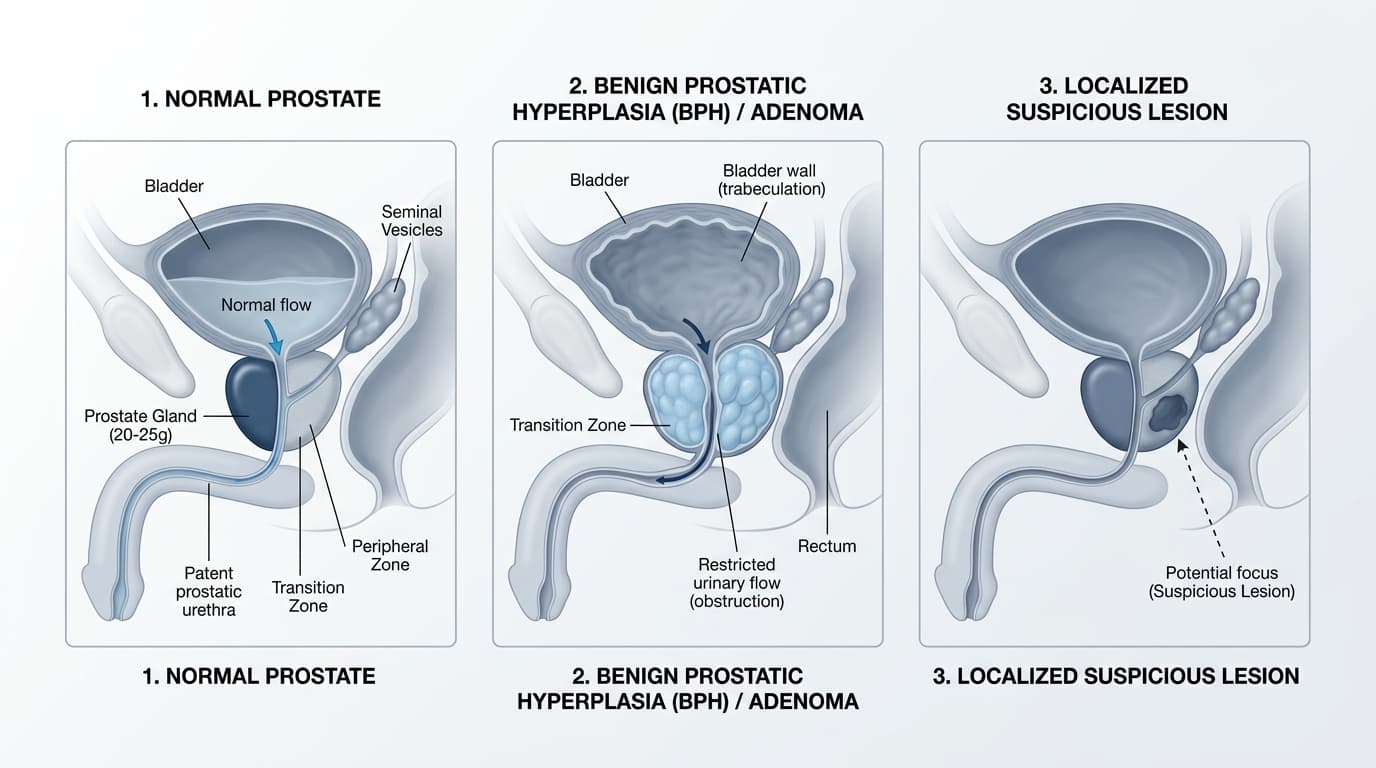
Prostate Adenoma (BPH) or Cancer? Overlapping Symptoms and Distinguishing Tests
Weak stream, nocturnal urination, PSA: benign prostatic hyperplasia and prostate cancer cannot be diagnosed on symptoms alone.
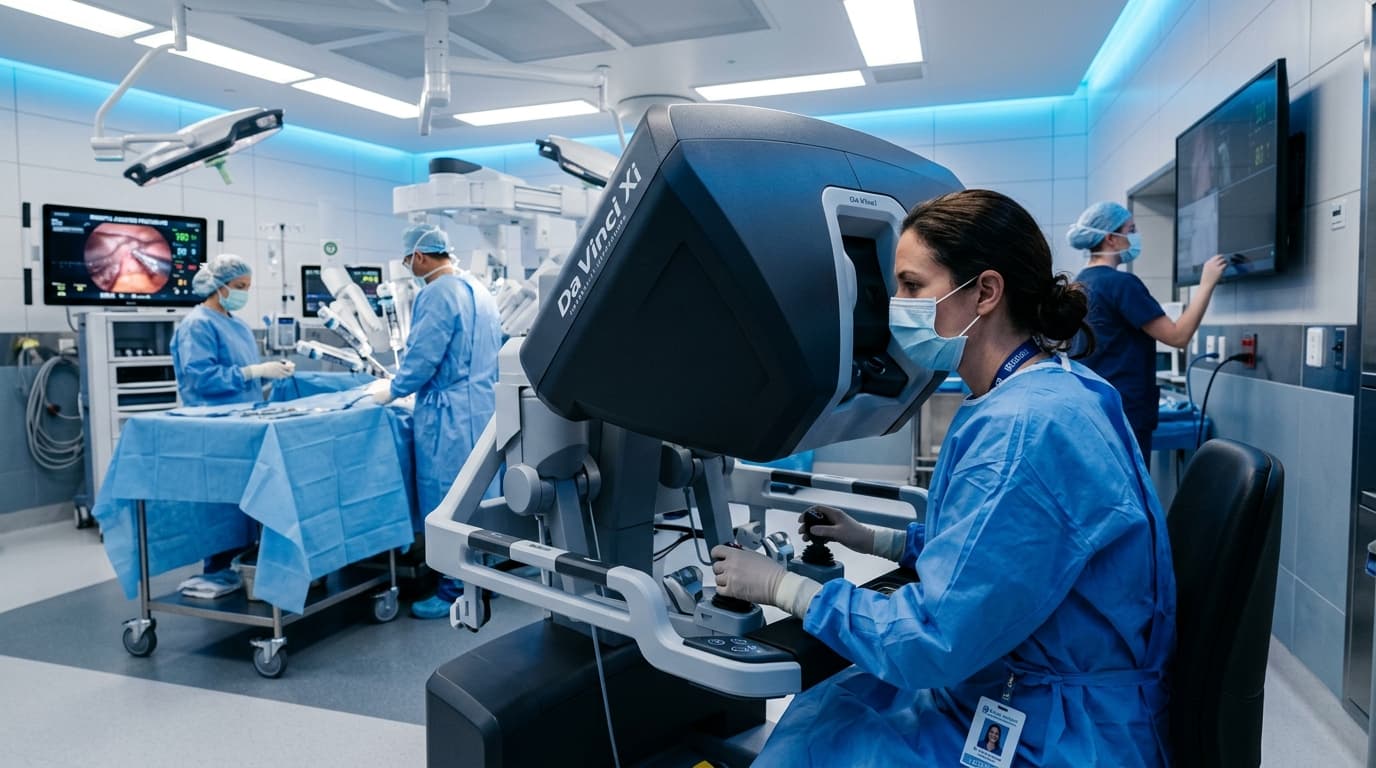
Robotic Surgery in Urology in Rabat: What Patients Should Know Before Deciding
Understand robot-assisted urological surgery, its clinical indications, limits, and essential questions to ask before deciding.