
Artificial urinary sphincter: treating severe urinary incontinence in men
After prostate surgery, particularly prostatectomy, some men have persistent, severe stress urinary incontinence. When pelvic floor rehabilitation and other treatments are not enough, the artificial urinary sphincter is the reference treatment for severe incontinence. This fully implanted device keeps the urethra closed at rest and opens on demand, by simply pressing a pump, to allow urination. The actual indication is decided in consultation, after quantifying the incontinence and assessing bladder function.

Dr Najib Abakka
Urological Surgeon in Rabat
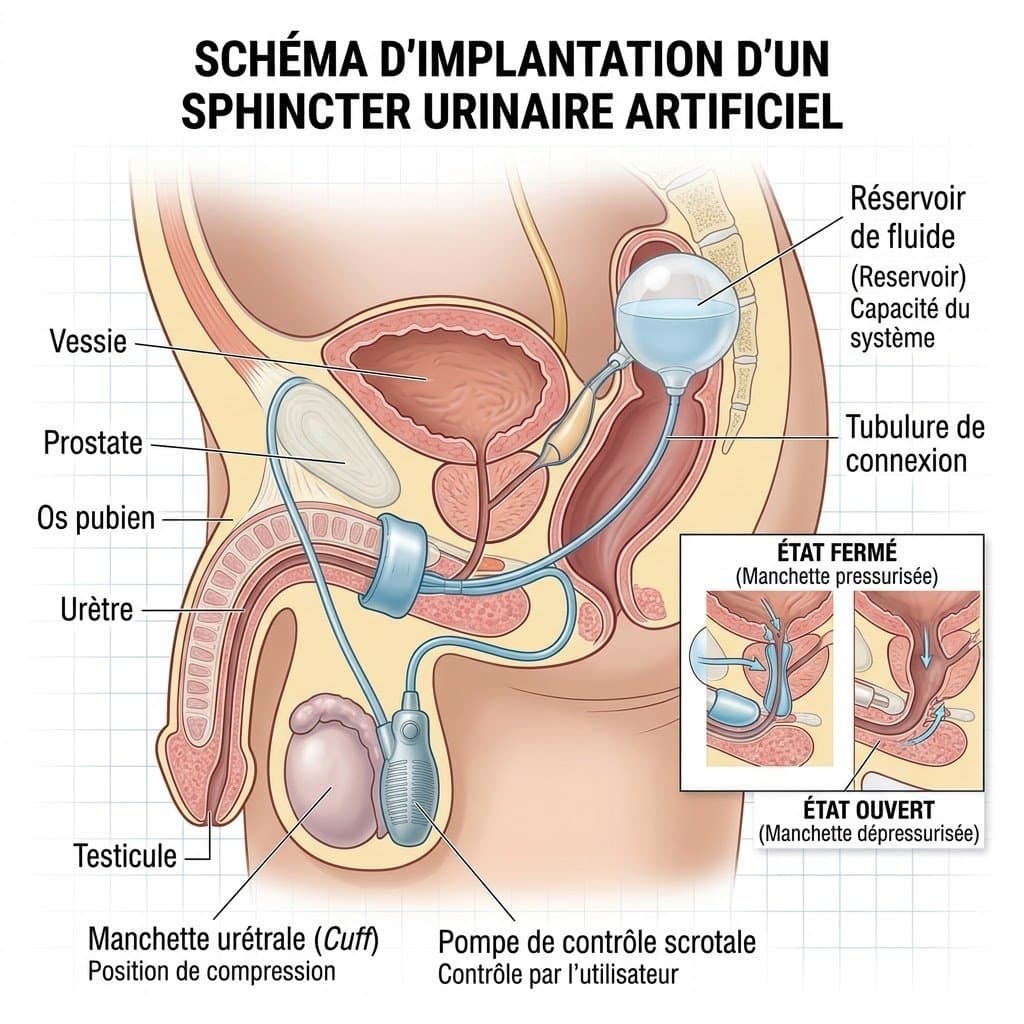
Schéma d'implantation du sphincter urinaire artificiel : vessie, manchette urétrale, pompe scrotale et réservoir.
When to consider an artificial sphincter?
The artificial sphincter is primarily for men with severe stress urinary incontinence after prostatectomy, persisting beyond the postoperative recovery period. It is indicated when leakage is significant (several pads per day) and related to sphincter insufficiency, and pelvic floor rehabilitation has not been enough. It may also be offered in other causes of sphincter insufficiency, on a case-by-case basis. The patient must be able to handle the pump (manual dexterity and understanding of how it works), and the bladder must function compatibly: untreated bladder overactivity or a urethral obstruction must be managed beforehand or ruled out. A history of pelvic radiotherapy does not rule out the device, but it increases the risk of erosion and requires a specific discussion.
How does the device work?
The most widely used artificial sphincter has three components connected by tubing: a cuff placed around the bulbar urethra, a pressure-regulating balloon placed near the bladder, and a pump placed in the scrotum. At rest, the cuff is filled and compresses the urethra: the patient is continent. To urinate, he presses the pump for a few seconds: fluid leaves the cuff towards the balloon, the urethra opens and voiding is possible. The cuff then refills automatically, closing the urethra again. The device is fully internal and invisible; only the pump can be felt in the scrotum. It changes neither sensitivity nor sexual function as such, and does not hinder voiding once activated.
Assessment before surgery
The consultation quantifies the incontinence: number of pads per day, weighed pad test, circumstances of leakage, impact on daily life. Urodynamic testing may be requested to assess bladder function and confirm sphincter insufficiency, and a cystoscopy to rule out a urethral stricture or another abnormality. The assessment also checks for urinary infection, skin and perineal status, current treatments (especially anticoagulants) and the patient's ability to handle the pump. A history of radiotherapy, urethral surgery or infections is noted, as it influences the risk of complications. The patient is informed of how the device works, of delayed activation and of the risks before any decision.
The operation
The operation takes place in the operating theatre, under general or spinal anaesthesia. The approach is most often perineal for placing the cuff around the bulbar urethra, with a small abdominal incision for the regulating balloon. The pump is positioned in the scrotum. The device is left deactivated at the end of the operation, to allow healing without compression of the urethra. A urinary catheter is generally left in place briefly. Hospital stay is generally brief, with antibiotic prophylaxis and pain relief. During the healing period, the patient remains incontinent as before: this is expected, as the device is not yet activated.
Activation and daily life
Activation takes place in consultation, once healing is achieved. The patient learns to press the pump, to urinate, then to wait for the cuff to refill automatically. The continence achieved is most often described as "social continence": no leakage or a single security pad per day. Night-time continence is generally good. The patient can resume his usual activities, including sport without excessive strain on the perineum, and travel. One important practical point: in case of later urethral catheterisation (operation, hospital stay), the device must imperatively be reported and deactivated beforehand, to avoid injury to the urethra; a card or document mentioning the implant may be given to the patient.
Risks and limits
Risks include device infection, urethral erosion by the cuff (more frequent in case of previous radiotherapy or traumatic catheterisation), mechanical failure, urethral atrophy with gradual recurrence of leakage, and anaesthesia-related risks. Erosion or infection generally requires removal of the device, with delayed reimplantation possible on a case-by-case basis. Surgical revision may be needed over the years to replace a component or adjust the cuff. The device requires regular handling of the pump: it is not suitable in case of major cognitive impairment or major manual incapacity. It does not treat urgency leakage related to bladder overactivity, which requires a different treatment.
Alternatives
Before the artificial sphincter, pelvic floor rehabilitation is offered, often from the period following prostatectomy. For mild to moderate incontinence, the male suburethral sling is an alternative, less effective in severe forms. Urethral bulking agents (injections) have limited and temporary efficacy. Absorbent pads and the penile clamp remain palliative solutions. As a last resort, in case of failure of all options and major incontinence, urinary diversion may be discussed, but it remains exceptional. The choice is made in consultation, according to severity, medical history and the patient's preferences.
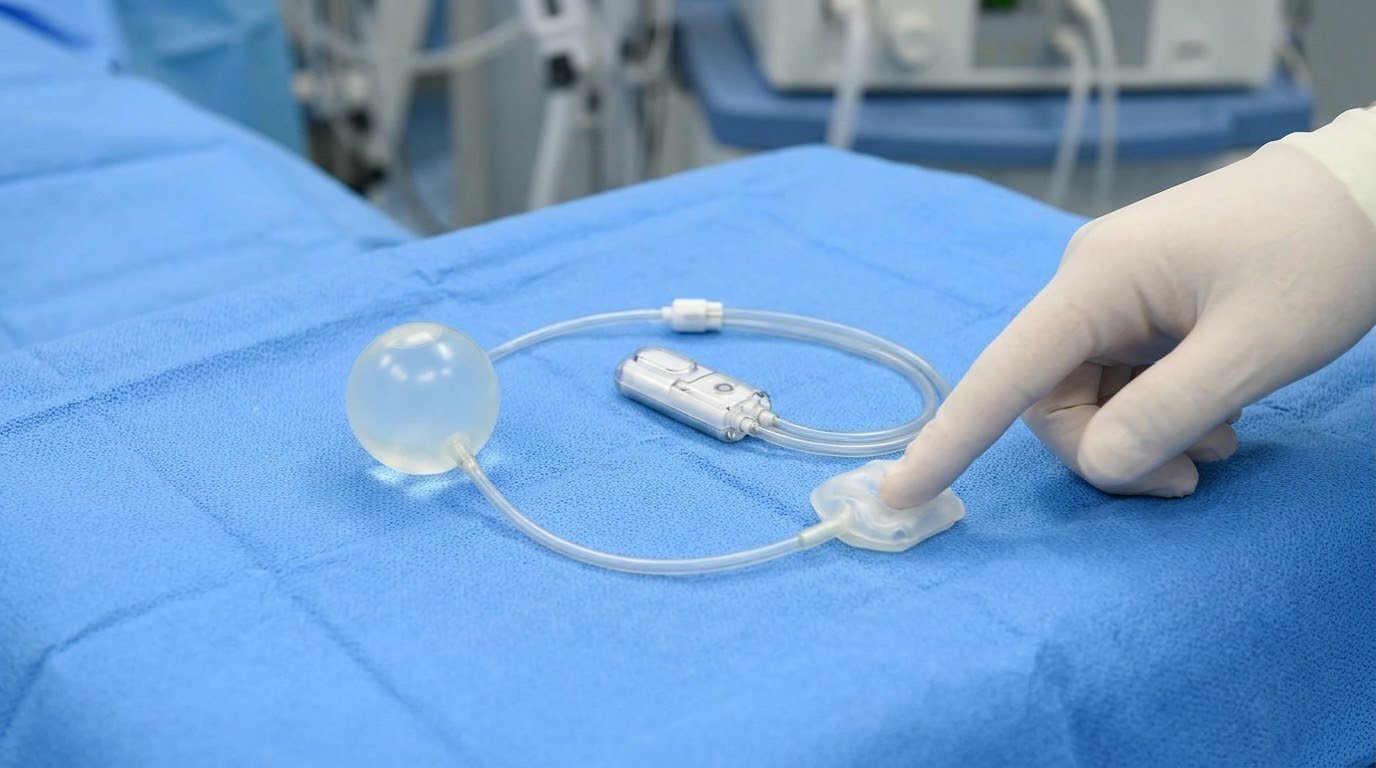
The device in real conditions
Frequently asked questions
Must I wait after prostatectomy?
Yes, a recovery period is respected, as some incontinence improves spontaneously with rehabilitation. The artificial sphincter is considered if severe incontinence persists beyond that.
Is the device visible?
No, the device is fully implanted and invisible. Only the pump can be felt in the scrotum.
Can I urinate normally?
Yes, once the device is activated: simply press the pump to open the cuff, urinate, then wait for the cuff to close again automatically.
What if I need to be catheterised in hospital?
You must imperatively tell the care team that you have an artificial sphincter and have it deactivated before any catheterisation, to avoid injury to the urethra.
How long does the device last?
Lifespan varies; revision may be needed after several years in case of failure, atrophy or recurrence of leakage.
What if I had radiotherapy?
Radiotherapy does not rule out the device, but it weakens the tissues and increases the risk of erosion. The decision is made case by case, after examination and discussion of the risks.
Does the artificial sphincter treat urgency?
No. It treats stress leakage related to sphincter insufficiency. Urgency leakage (bladder overactivity) requires a different treatment, to be assessed in consultation.
Related guides & articles
Browse all articles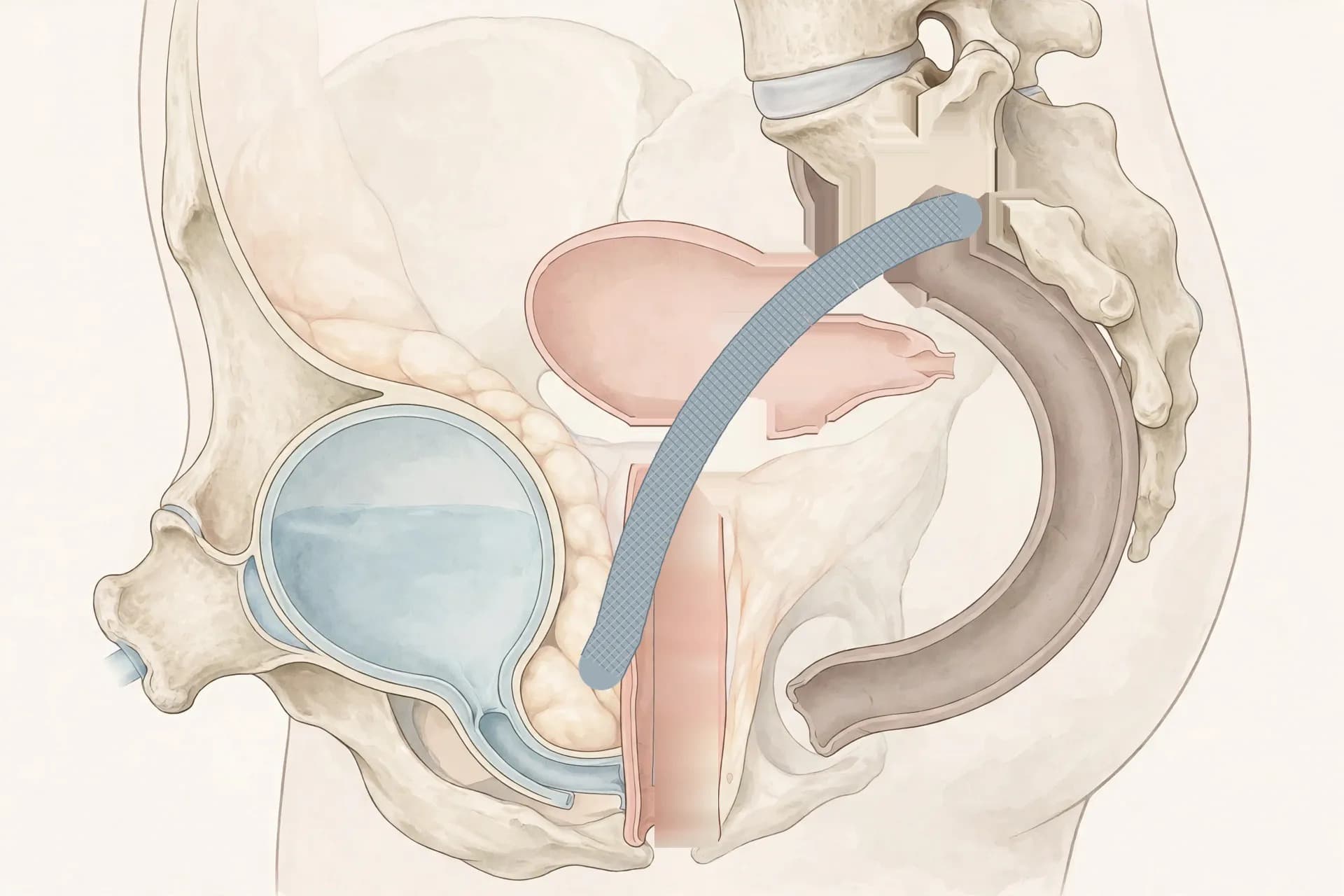
Female Genital Prolapse: Treatment by Sacrocolpopexy (Promontofixation)
Pelvic organ prolapse in women: understanding genital prolapse (cystocele, rectocele, uterine prolapse), its symptoms, its diagnosis, and laparoscopic sacrocolpopexy, the reference surgical treatment for the apical compartment.

Robotic Surgery in Urology in Rabat: What Patients Should Know Before Deciding
Understand robot-assisted urological surgery, its clinical indications, limits, and essential questions to ask before deciding.

Prostate Cancer: From PSA to MRI, Understanding the Diagnostic Pathway Before Discussing Surgery
An elevated PSA does not automatically mean cancer. Learn how PSA, clinical exam, multiparametric MRI, and targeted biopsy fit together.