
Frequently Asked Questions
The questions patients most frequently ask online — PSA, prostate, stones, infections, sexuality, fertility, testicle — with the practice's own answers.

Dr Najib Abakka
Urological Surgeon in Rabat

Les questions que les patients posent le plus souvent en consultation.
“My PSA is slightly high — does that mean cancer?”
No, far from it. PSA is a protein made by the prostate, and its level rises for many benign reasons: a prostate that grows with age, prostatitis, a recent rectal exam, cycling, or sexual intercourse the day before the blood test.
That is why a single number is never enough. Usually, the test is repeated after some time, under good conditions, and interpreted in context: your age, the size of the prostate, the clinical exam. If doubt remains, a prostate MRI helps decide, together with you, whether a biopsy is really needed.
A raised PSA should therefore be taken seriously, but without panicking: most of the time, it has another explanation than cancer.
“My PSA is low — am I in the clear?”
A low PSA is reassuring, but it does not formally rule out cancer: some prostate cancers, rarely, produce little PSA. That is why a cancer can be found with a normal PSA.
That is why the rectal exam remains important, even with a low PSA: a nodule or a hard area on examination justifies further tests, whatever the number.
In practice: a low PSA + a normal exam = a low risk, and simple monitoring is enough. But a symptom (blood in urine, unusual urinary problems) should always be shown, even with a low PSA.
“I get up several times at night to urinate — is it my prostate?”
Often yes, after the age of 50: an enlarging prostate makes it harder to empty the bladder, which wakes you more often. But it is not the only cause: drinking a lot in the evening, diabetes, diuretic medication, or sleep apnea can do the same.
A few habits already help: drinking less after 6 p.m., avoiding alcohol in the evening, urinating before bed. If waking persists, if the stream is weak, or if you feel you do not empty your bladder properly, a consultation will sort things out — a simple exam and, if needed, an ultrasound and a PSA test.
Getting up once a night after 60 is common; getting up three times or more, or being woken by an urgent need, deserves medical advice.
“For my enlarged prostate, which operation should I choose: resection, laser, Rezum?”
There is no single right answer: the choice depends on the size of the prostate, your age, your medications (blood thinners), and what matters most to you — for example preserving ejaculation.
Resection (TURP) remains the reference for medium-sized prostates; laser (HoLEP) can treat large prostates with less bleeding; Rezum (water vapor) is gentler, done as an outpatient procedure, and preserves ejaculation better, but it suits smaller prostates and its effect takes a few weeks to set in.
It is a shared decision: after examination, ultrasound, and flow measurement, your urologist explains the advantages and disadvantages of each option, including effects on continence and sexuality, and you choose together.
“My prostatitis has lasted for months — what tests should I ask for?”
Pelvic pain that lasts — between the legs, in the lower abdomen, or in the perineum — with frequent urges to urinate and often normal tests: this is the classic picture of chronic prostatitis, or chronic pelvic pain syndrome.
Useful tests: a urine analysis and, if needed, a urine culture, a rectal exam, a PSA test depending on age, and sometimes an ultrasound. Often, no germ is found: the pain does not come from an infection, and repeated antibiotics do not help.
Care is then comprehensive: treating constipation, moving, managing stress, sometimes medication to relax the prostate and bladder. It is a troublesome but benign condition that improves with regular follow-up — not with endless antibiotics.
“Kidney stone: how long does it take to pass?”
It depends on its size and position. A small stone (under 5 mm) often passes on its own within a few days to a few weeks, with wave-like pain — the famous renal colic — that comes and goes.
Drinking enough, moving around, and taking a suitable painkiller help get through it. On the other hand, go to the emergency department in case of fever, uncontrollable vomiting, or if you stop urinating altogether: it may mean the stone is blocking urine and infection threatens.
After the crisis, we look for why the stone formed — stone analysis, blood and urine tests — because one stone in two comes back within ten years without prevention.
“Will a stone come back? What should I eat and drink to avoid one?”
Yes, it can: without prevention, one stone in two comes back within ten years. But prevention works, provided you know the nature of the stone — which is why it is worth retrieving it and having it analyzed when possible.
The basics apply to almost everyone: drink enough to urinate more than 2 liters a day, limit salt, keep a normal calcium intake (do not cut it out!), and limit animal protein and foods very high in oxalates, depending on the type of stone.
Tests (blood, 24-hour urine) then allow tailored prevention, sometimes with medication. Those tests are what make the difference between “drink more” and real prevention.
“My urinary infections keep coming back — why?”
In women, this is common: the urethra is short, and sexual intercourse, constipation, or menopause favor recurrences. In men, a urinary infection is rarer and should always prompt a search for a cause, often prostatic.
Prevention starts with simple steps: drinking enough, urinating after intercourse, treating constipation, avoiding vaginal douches and irritating products. Cranberry and D-mannose help some women, but they do not replace medical advice.
If infections repeat (more than 3 a year), an assessment is needed: urine test, ultrasound, and sometimes cystoscopy. Preventive treatment can then be discussed, rather than repeated antibiotics.
“My urine tests are normal, but I still have infection symptoms”
This is a common and frustrating situation: burning, urgent urges, pain, while the dipstick and urine culture come back normal. It happens when germs are few, when urine is diluted, or when the problem is not infectious at all.
Other causes give the same symptoms: interstitial cystitis, chronic prostatitis, overactive bladder, or irritation (hygiene products, intercourse). That is why the test is sometimes repeated under better conditions, and the assessment broadened — ultrasound, flow measurement, cystoscopy if needed.
Do not take antibiotics “just in case” without advice: they do not fix a non-infectious problem and they promote resistance. If symptoms persist, a consultation will look for the real cause.
“How can I calm an interstitial cystitis flare-up?”
Interstitial cystitis — or bladder pain syndrome — is not an infection: tests are normal, but the bladder hurts, with urgent urges and burning, in flare-ups. Certain foods and drinks (coffee, alcohol, spicy or acidic dishes, sweeteners) trigger attacks in many patients.
During a flare-up, local warmth, drinking in small sips, and avoiding known triggers help. Several treatments exist — bladder instillations, oral medication, rehabilitation — and combining them, with regular follow-up, is what spaces out attacks.
If you have had bladder pain for months with normal tests, do not stay alone with this vague diagnosis: a consultation can establish the diagnosis and build a treatment plan. It is not “in your head”, and it is not incurable.
“At 20, my erection problems — psychological or physical?”
At 20 or 25, the cause is most often psychological: stress, performance anxiety, tiredness, or pressure you put on yourself. Pornography, by creating unrealistic expectations, also plays a role in some young men.
That does not mean “it is in your head, deal with it”: anxiety feeds the problem, and the problem feeds anxiety. Talking about it — to your doctor, to a urologist — is often enough to unlock the situation.
Consult if the problems persist, if you no longer have morning erections at all, or if you have other symptoms (tiredness, low libido, diabetes, heavy smoking). A simple assessment can then rule out a physical cause.
“I ejaculate too quickly, and sometimes I lose my erection — what can I do?”
Premature ejaculation is the most common male sexual problem, and it often comes with an incomplete erection: the more you fear ejaculating quickly, the more anxiety disturbs erection, and vice versa. This vicious circle explains why both problems often arrive together, especially in young men.
Solutions exist, step by step: behavioral techniques (slowing down, breathing, pauses), then, if needed, treatments — local anesthetics or medication that delays ejaculation, sometimes combined with erection treatment. The choice is made in consultation, depending on your situation.
Do not buy miracle products online: some are ineffective, others dangerous. Talk to a urologist: it is an ordinary reason for consultation, and there is almost always a solution.
“My penis is curved — is it Peyronie's disease? Is there treatment without surgery?”
A slight curvature is normal and common. Peyronie's disease is when a hard plaque has formed in the penis, causing a curvature that appears or worsens, sometimes with pain on erection and difficulty with intercourse.
Yes, there are treatments without surgery: oral medication, injections into the plaque, traction, or shock waves depending on the case — they mainly aim to stabilize the curvature and calm pain. Surgery is reserved for stable curvatures that prevent intercourse, and it can cause slight shortening, which is discussed frankly beforehand.
Consult if the curvature changes, if you feel a hard plaque, or if intercourse becomes difficult: the earlier care starts, the better the chances for non-surgical options.
“I have a varicocele — will I be able to have a child?”
Varicocele — dilated veins around the testicle — is very common: about one man in seven has one, and most have children without any problem.
It only becomes a problem if it interferes with sperm production. That is what a semen analysis and a Doppler ultrasound check. If the numbers are normal, simple monitoring is enough.
If the semen analysis is abnormal and the varicocele is the likely cause, a small operation can improve things — but it guarantees nothing, and the decision is made case by case, as a couple. Do not panic: a varicocele is not a sentence.
“I can see blue veins on my testicle — is it a varicocele? And pain after the operation?”
Blue, slightly protruding veins above the testicle — often described as a “bag of worms” — do suggest a varicocele, especially on the left and when standing. Without pain or other symptoms, it is not an emergency, but it deserves an opinion and a Doppler ultrasound to confirm.
After a varicocele operation, pain or sensitivity of the testicle for a few weeks is common: tissues are healing, and moderate swelling can persist. It should fade gradually.
Consult again if pain worsens, if fever appears, or if the testicle swells a lot and becomes very hard: that may signal a complication (hematoma, infection) that needs to be seen quickly.
“My sperm count is low — is natural pregnancy still possible?”
A single semen analysis is not a verdict. Numbers vary a lot from one sample to another — fever, tiredness, abstinence delay — and the test is always repeated before concluding.
Even with low numbers, natural pregnancy remains possible: it only takes one sperm, and fertility is a couple's matter — the partner's age and fertility count just as much.
If numbers stay low, we look for the cause (varicocele, hormones, infections, medication, smoking, heat) and discuss the options, from simple monitoring to medically assisted reproduction. Most importantly: do not stay alone with this result, talk about it in consultation.
“I have a lump on my testicle — is it cancer?”
Most testicular lumps are not cancers: cyst, varicocele, or a small benign lump of the epididymis. But a hard, painless lump that does not roll under the finger should always be shown quickly to a doctor.
Ultrasound settles it in a few minutes: it distinguishes a solid mass from a fluid-filled cyst. It is a painless exam, and it is better to have it for nothing than to wait months worrying.
Testicular cancer is rare, but it mainly affects young men, and it is very curable when caught early. Hence a simple rule: any new lump deserves a consultation within the week.
“Sudden testicular pain — is it an emergency?”
Yes, if it came on suddenly, intense, sometimes with nausea or a testicle that seems to have risen: it may be testicular torsion — the cord has twisted and blood no longer reaches the testicle.
In that case, every hour counts: beyond 6 hours, the testicle may be lost. Do not wait for it to “pass”, do not massage, do not apply heat: go to the emergency department immediately.
Other causes are possible — infection, trauma, painful varicocele — but only emergency care can tell them apart. Sudden testicular pain is always an emergency.
“I have blood in my urine — should I worry?”
Blood visible in the urine, or even detected only on a dipstick, should never be ignored — but it does not mean cancer. Most often, it is a urinary infection, a stone, or irritation after physical effort.
A bladder tumor must still be ruled out, especially after 50 and in smokers. That is why a urine test, an ultrasound, and sometimes a cystoscopy — a quick exam to look inside the bladder — are usually offered.
Seek care without delay in case of clots, pain, fever, or if you can no longer urinate. And do not reassure yourself with a “it will pass”: a single episode is enough to consult.
“I leak a few drops when I cough or laugh — is that normal?”
It is common, especially after pregnancies or at menopause: the pelvic floor supporting the bladder has weakened, and effort (coughing, laughing, sport) leaks a few drops. It is ordinary, but it is not inevitable — and the shame around it means it is talked about too little.
Pelvic floor rehabilitation is the first treatment, and it helps most women. Simple steps count too: treating a chronic cough, fighting constipation, avoiding heavy lifting.
If leaks affect your daily life, if you often get up at night, or if you have urgent urges you cannot hold, a urology consultation can assess the situation and offer a suitable solution — there are several, including surgery when needed.
Related guides & articles
Browse all articles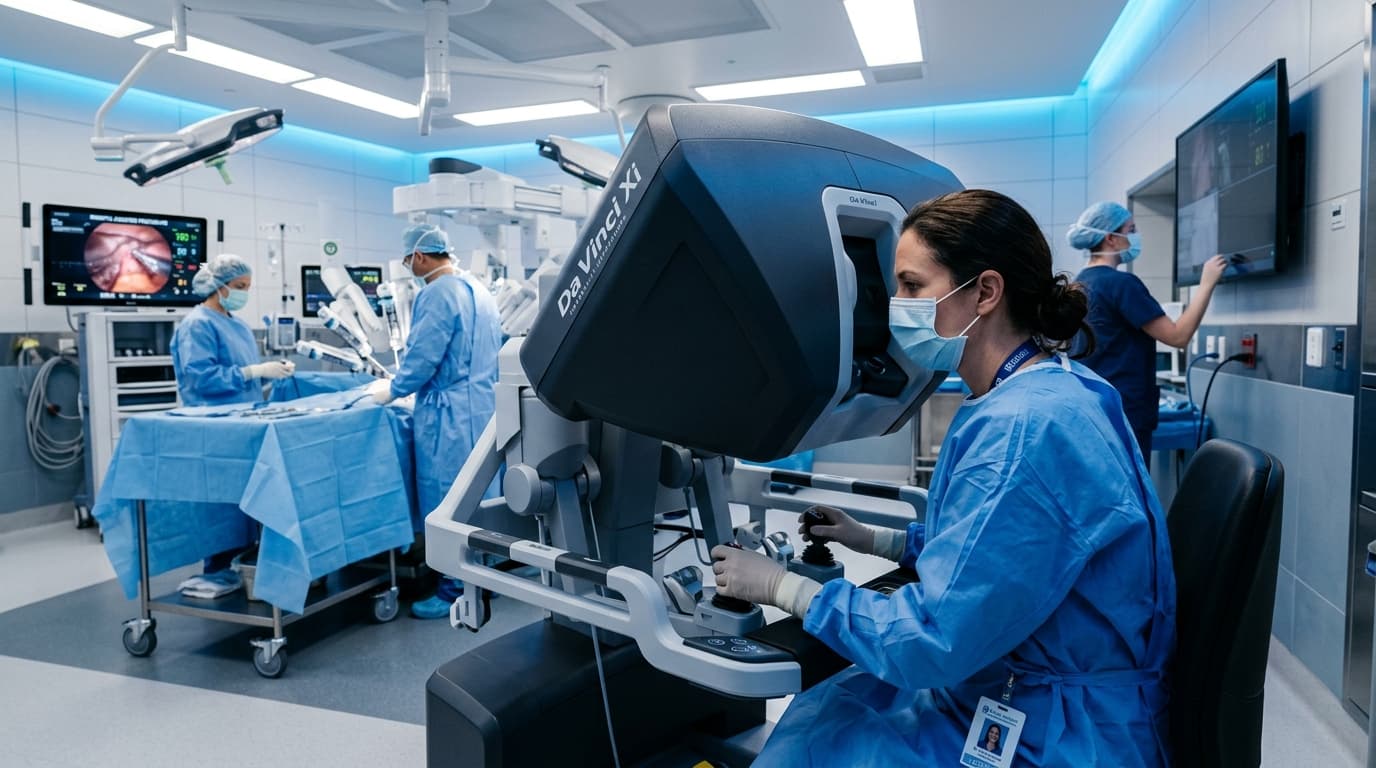
Robotic Surgery in Urology in Rabat: What Patients Should Know Before Deciding
Understand robot-assisted urological surgery, its clinical indications, limits, and essential questions to ask before deciding.

Prostate Cancer: From PSA to MRI, Understanding the Diagnostic Pathway Before Discussing Surgery
An elevated PSA does not automatically mean cancer. Learn how PSA, clinical exam, multiparametric MRI, and targeted biopsy fit together.

Robot-Assisted Radical Prostatectomy: 12 Essential Questions to Ask Before Surgery
Facing prostatectomy? Here are 12 vital questions concerning surgical indication, nerve sparing, continence, erectile function, and follow-up.